Page one: the pitch
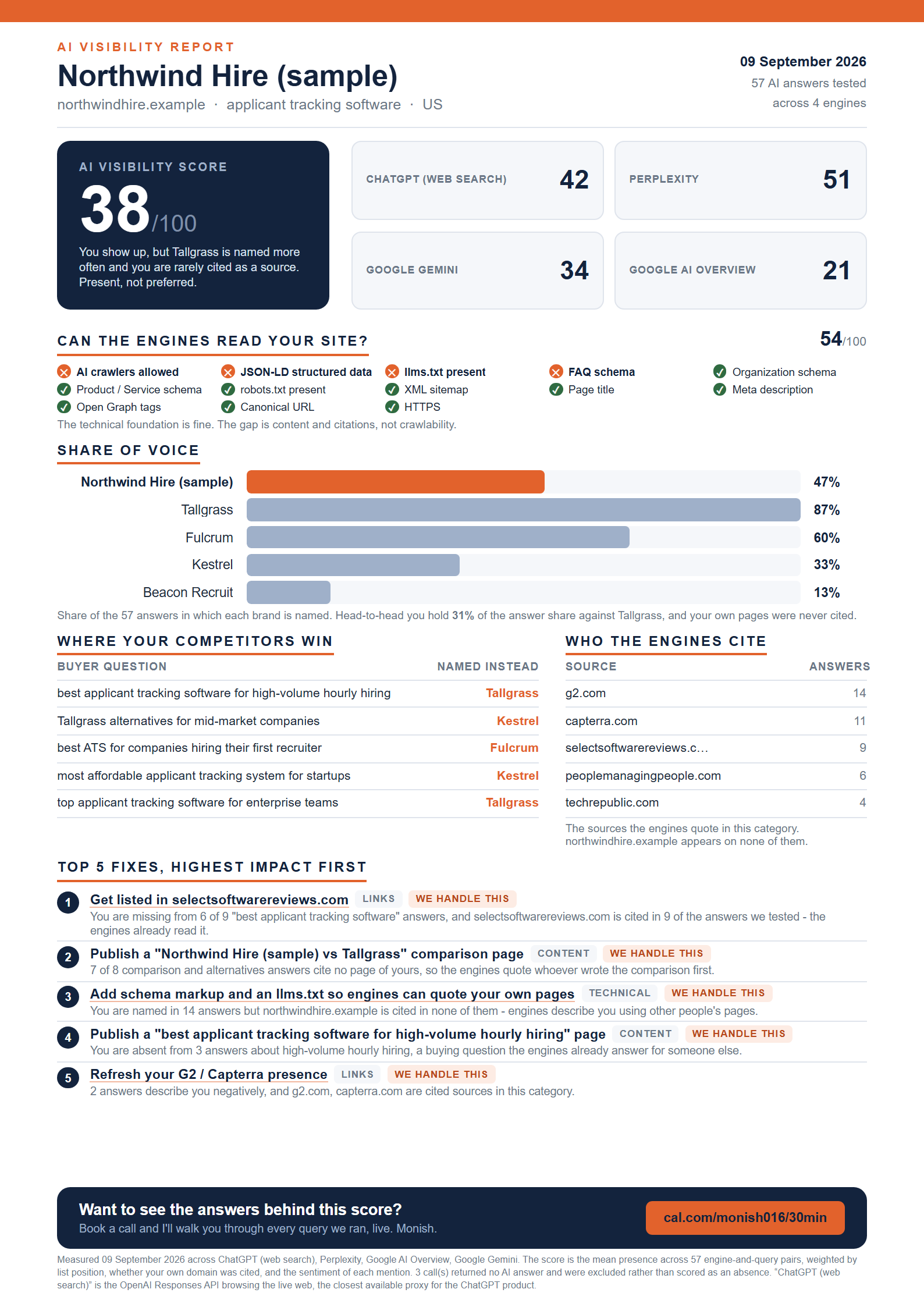
The blended number, and one sentence that has to agree with the data on the page: named but rarely cited, or named nowhere, or cited but behind a rival.
The same arithmetic per engine. An engine with fewer than three usable answers shows n/a rather than a misleading zero.
The thirteen technical checks, pass or fail, with the readiness score they produce.
How often each brand the engines named appears, with your bar in orange. The head-to-head line says how you stand against the leader.
The exact buyer questions where a rival was named and you were not, and which rival. This is the list a content plan comes from.
The sources the answers trusted. If your own domain is not on it, that is the gap.
Ordered by impact against how quickly each lands. Every one is something we do on a plan, and none of them is a link on a competitor's site.
A booking link. The free version stops here; page two is the diagnostic behind it.
Page two: the diagnostics
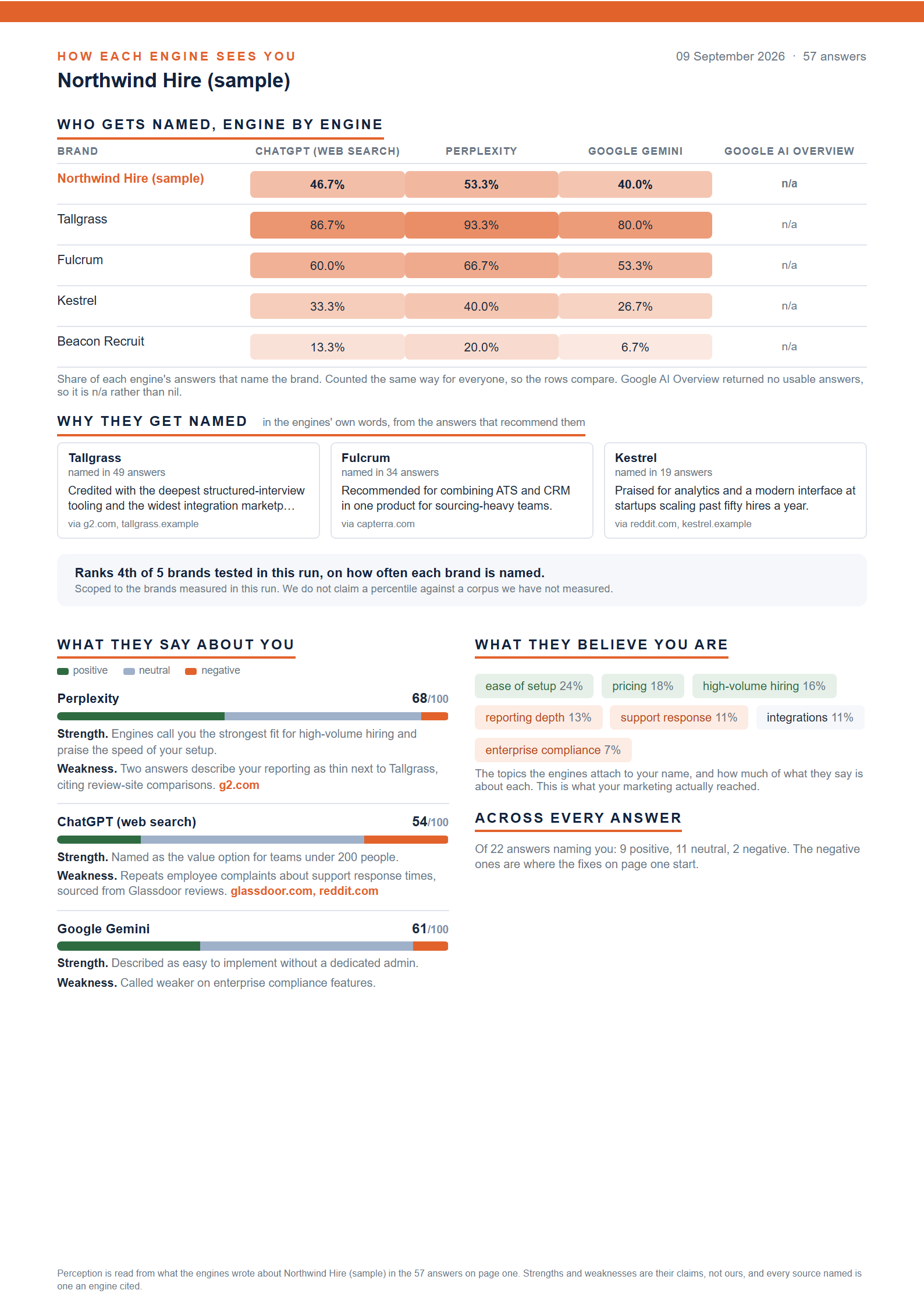
Each brand's share of each engine's answers. A brand can own Perplexity and be absent from Gemini, and only one of those needs fixing.
For the top rivals, the reason the answers give when they recommend them, in the engines' words, with the sources behind it.
Where you stand among the brands measured in this run. No claim against a corpus we have not measured.
Per engine: a sentiment score, the strength they repeat, the weakness they repeat, and where the weakness comes from.
The topics the engines attach to your name and how much of what they say is about each.
What the free version leaves out
The free check on this site produces page one. Page two, the engine-by-engine detail and the reasons rivals get named, comes with every plan, along with the monthly rescans that show whether the fixes moved the number. The PDF of both pages is here if you would rather read it that way.
Yours takes three minutes
Your website and region. The score appears in about three minutes; the PDF opens for a work email.